Healthcare knowledge base
A healthcare software support team was answering the same tickets over and over, while past solutions sat locked in closed tickets. I designed an AI-powered knowledge base that turns resolved tickets into trusted, searchable articles — with a human always in the loop.
The answer already exists — in a closed ticket nobody can find.
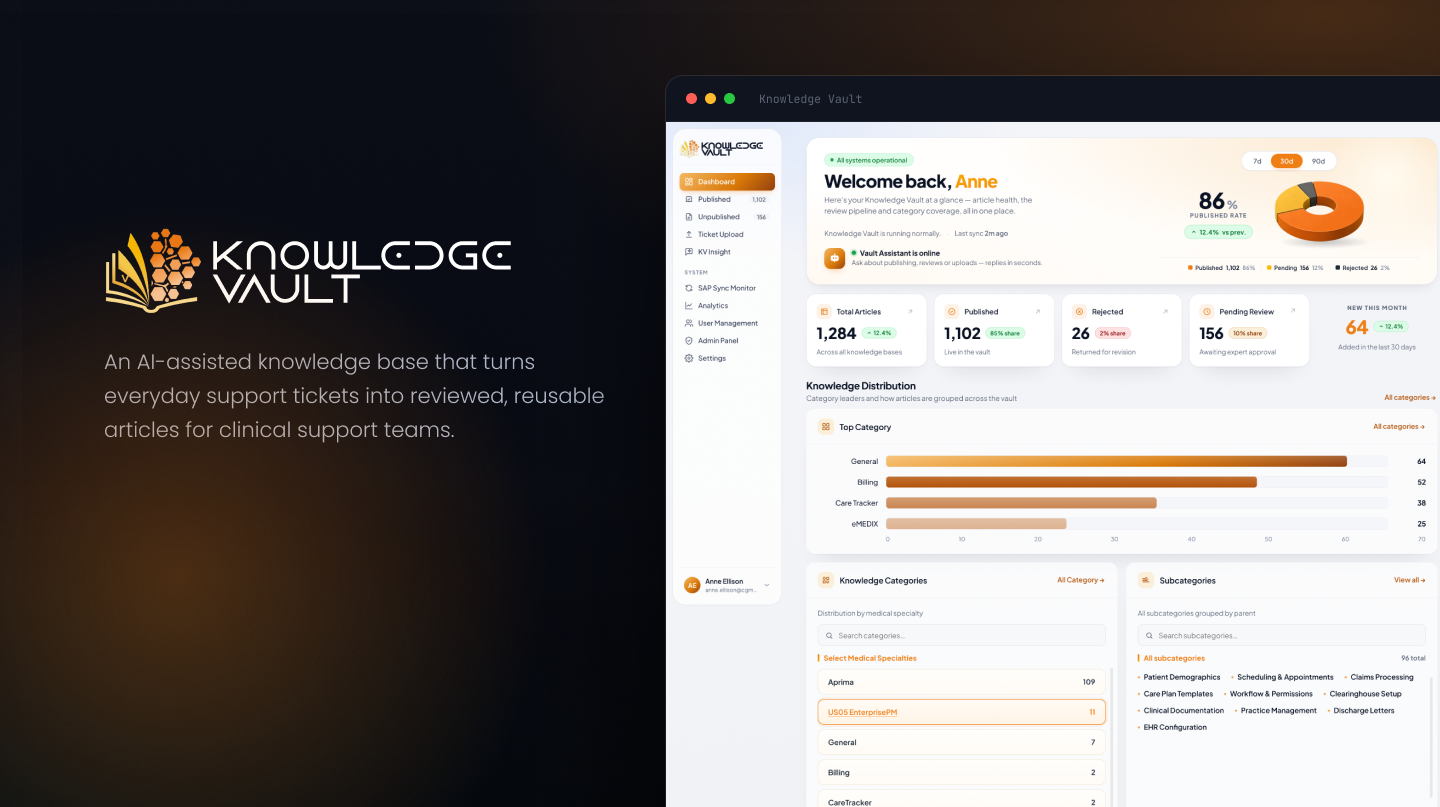
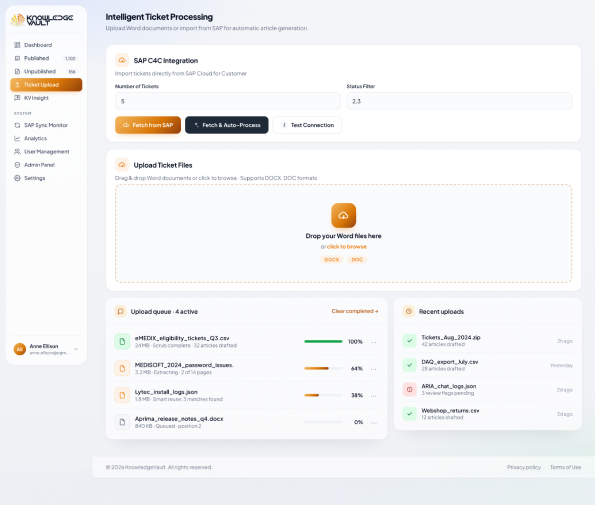
This is an AI-powered knowledge base for a healthcare software support team handling thousands of tickets across a dozen medical products. Every resolved ticket held a real answer, but it stayed locked in a closed case. I designed a platform that turns those tickets into structured, searchable articles — with AI drafting the first version and support experts reviewing before anything publishes.
The hard part
A knowledge base lives or dies on trust. In healthcare support, a stale or wrong answer isn’t just annoying — it can misguide a clinic. AI could draft articles fast, but nothing could publish unchecked. The challenge was a system fast enough to keep up with ticket volume, yet safe enough that a human expert signs off on every article, with duplicates caught before they multiply.

What the research told me
How I worked
Learn the support workflow
I interviewed agents and mapped how tickets get resolved to see where knowledge was being lost.
Design the AI-to-human flow
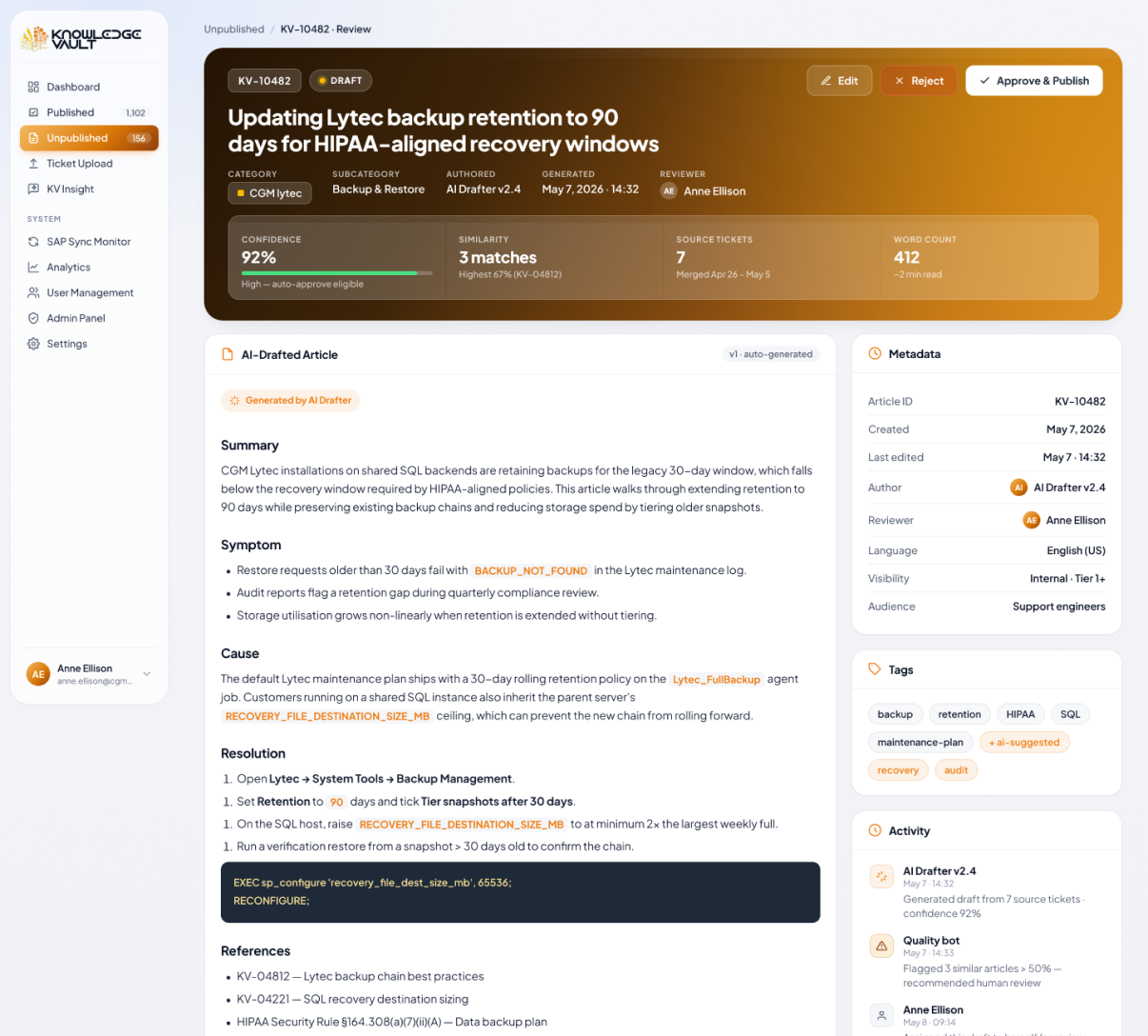
I shaped how AI drafts an article from a ticket and hands it to an expert for review.
Build in trust signals
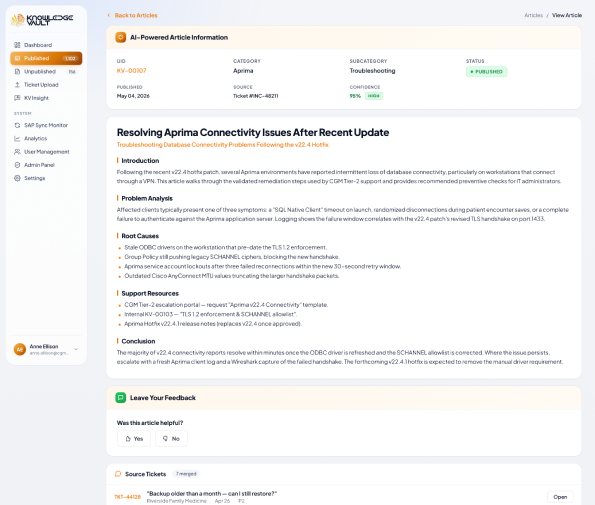
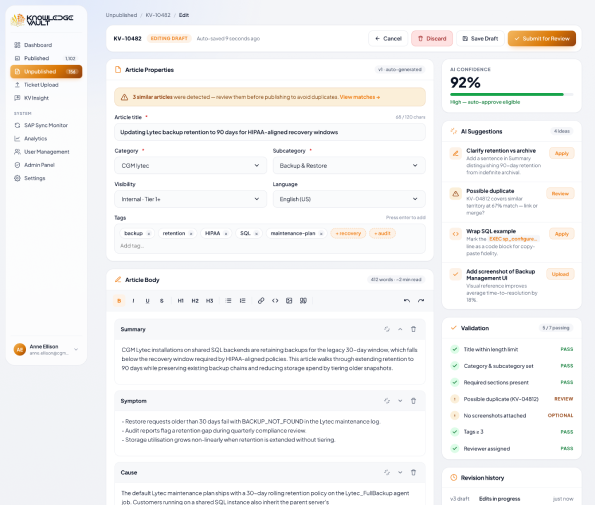
Confidence scores, similarity checks, and validation states let reviewers approve with confidence.
Make it findable
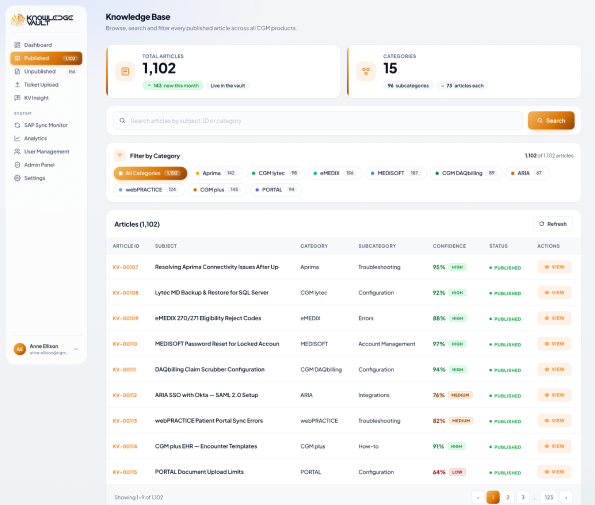
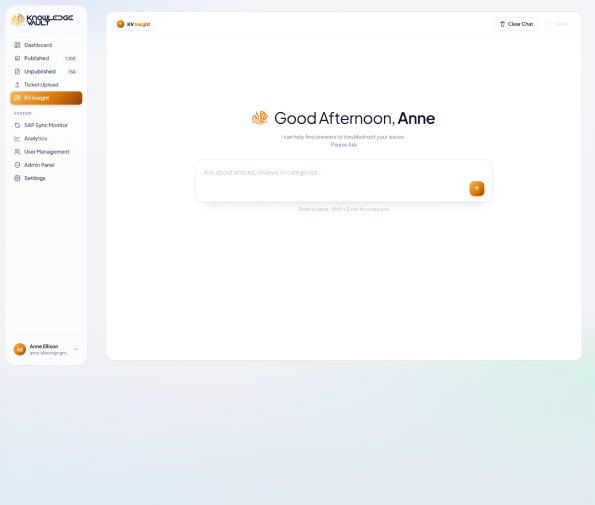
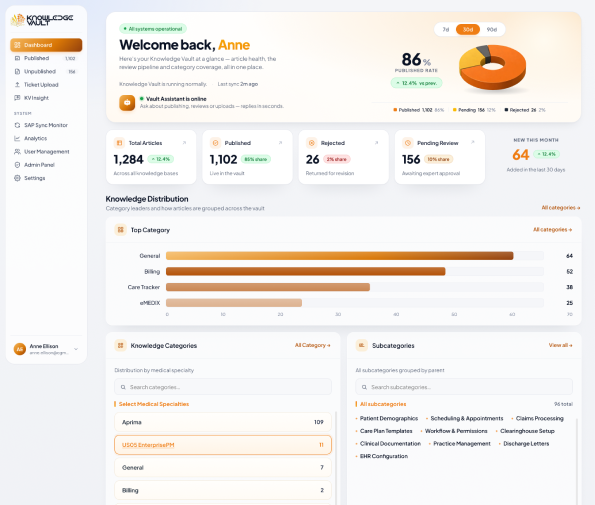
A clean knowledge base with search, categories, and an AI assistant so answers surface fast.
From rough to right
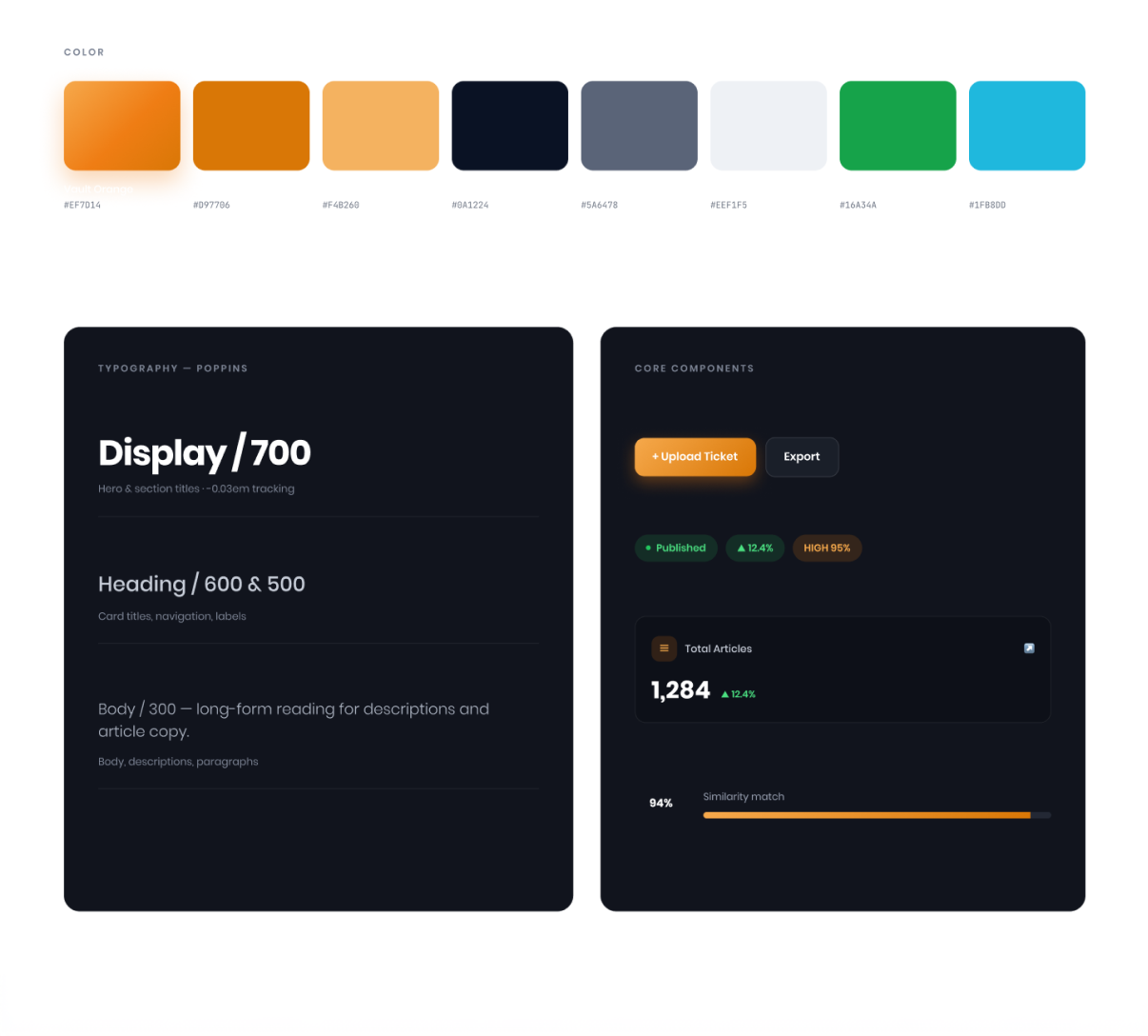
I iterated on the review and editor layouts — how to show AI confidence, similar-article matches, and validation checks without burying the article itself. Small, well-placed trust signals let a reviewer approve or reject in seconds. The design system kept every screen consistent across the platform.
The shipped design
The platform ships as an AI-powered knowledge base with a human in the loop. AI drafts articles from resolved tickets, experts review with full context, and a clean, searchable library — plus an AI assistant — makes answers easy to find across every medical product.
- A searchable, filterable knowledge base across all products
- An AI assistant for natural-language answers
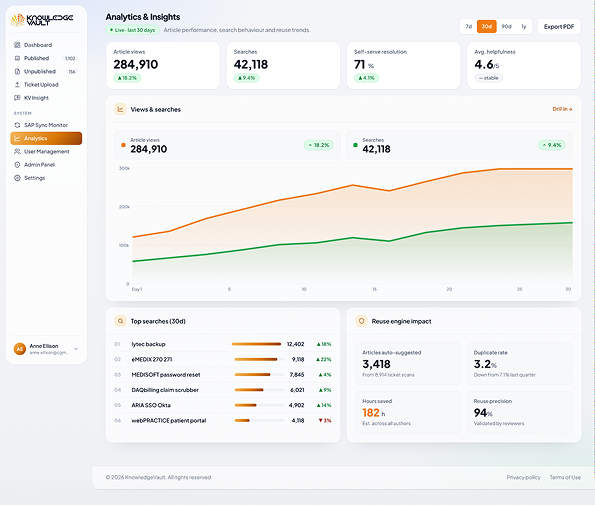
- Analytics on usage, search behaviour and reuse impact
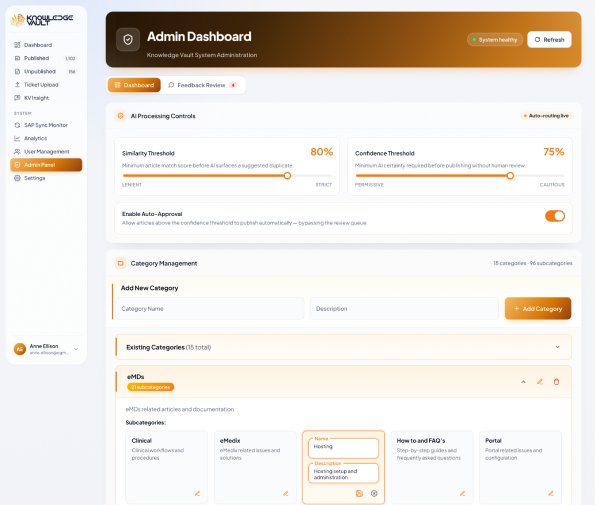
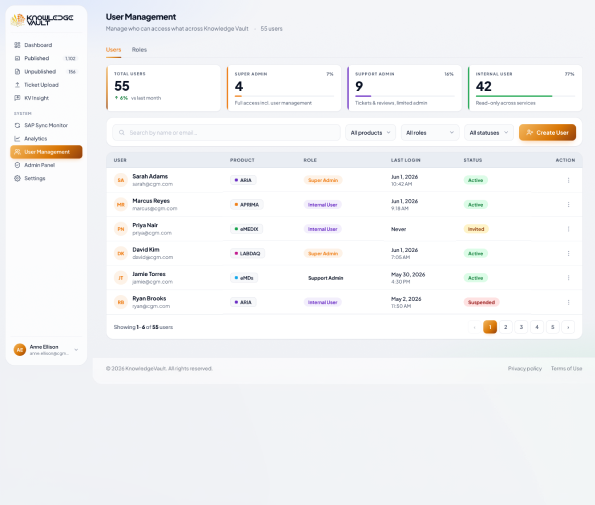
- Admin controls for AI thresholds, categories, users and access